Dry eyes affect many people, yet the right diagnosis and treatment can transform their daily comfort. Our holistic dry eye management program identifies the root causes of dry eye and offers integrative, long-lasting treatments.
What Sets Us Apart
Advanced Diagnostics
We use precise tools to assess tear film quality, eyelid gland function, and inflammation.
Personalized Treatment Plans
These include natural remedies, in-office therapies, and dietary or lifestyle guidance.
Focus on Comfort and Sustainability
We aim to reduce reliance on artificial tears by enhancing your eyes’ natural hydration systems.
Whether mild discomfort or severe irritation, our tailored care ensures relief and healthier eyes for the long term.
Dry Eye Management at Pieterse Optometrists
Dry eyes are a common condition that can significantly impact your quality of life, causing discomfort, irritation, and even affecting your vision. At Pieterse Optometrists, we offer a comprehensive dry eye management program designed to identify the root causes of dry eye and provide integrative, long-lasting treatments. Our holistic approach ensures that each patient receives personalized care tailored to their specific needs, promoting comfort and eye health.
Understanding Dry Eye Syndrome
Dry eye syndrome occurs when your eyes do not produce enough tears, or when the tears evaporate too quickly. This can lead to a variety of symptoms, including dryness, irritation, redness, a gritty sensation, and blurred vision. Factors contributing to dry eye can include environmental conditions, prolonged screen time, aging, hormonal changes, and certain medical conditions or medications.
What Sets Us Apart in Dry Eye Management
At Pieterse Optometrists, we are committed to providing exceptional care for patients with dry eye syndrome. Our program is distinguished by several key features:

Advanced Diagnostics
We use precise diagnostic tools to assess tear film quality, eyelid gland function, and inflammation. By understanding the underlying causes of your dry eye, we can develop a targeted treatment plan that addresses your specific needs. Our diagnostic process may include:
Tear Film Analysis
This involves evaluating the composition and stability of your tear film to identify deficiencies or imbalances that may be contributing to dry eye.
Meibomian Gland Evaluation
The meibomian glands in your eyelids produce oils that help prevent tear evaporation. We assess the function of these glands to determine if blockages or dysfunction are affecting your tear film.
Inflammation Assessment
Inflammation is a common factor in dry eye syndrome. We use specialized tests to detect and measure inflammation in the eye, allowing us to tailor treatments to reduce it effectively.

Personalized Treatment Plans
Our treatment plans are customized to meet the unique needs of each patient. We offer a range of options, including natural remedies, in-office therapies, and dietary or lifestyle guidance. Our goal is to provide comprehensive care that addresses the root causes of dry eye and promotes long-term relief. Treatment options may include:
Natural Remedies
We may recommend natural supplements or eye drops that support tear production and eye health. These can include omega-3 fatty acids, which have anti-inflammatory properties, and lubricating eye drops that mimic natural tears.
In-Office Therapies
We offer advanced in-office treatments such as LipiFlow, which uses thermal pulsation to unclog blocked meibomian glands and restore normal oil flow to the tear film. Other therapies may include intense pulsed light (IPL) treatment to reduce inflammation and improve gland function.
Dietary and Lifestyle Guidance
We provide guidance on dietary changes and lifestyle modifications that can help alleviate dry eye symptoms. This may include increasing water intake, using humidifiers, taking regular breaks from screens, and wearing sunglasses to protect against wind and sun exposure.

Focus on Comfort and Sustainability
Our approach aims to reduce reliance on artificial tears by enhancing your eyes’ natural hydration systems. We focus on sustainable solutions that improve your eye health and comfort over the long term. By addressing the underlying causes of dry eye, we help you achieve lasting relief and reduce the need for frequent use of artificial tear products.

The Impact of Dry Eye Management
Effective dry eye management can transform your daily comfort and quality of life. By addressing the root causes of dry eye and providing personalized care, we help our patients experience significant improvements in their symptoms and overall eye health. Benefits of our dry eye management program include:
Improved Comfort
Our treatments are designed to alleviate the discomfort and irritation associated with dry eye, allowing you to enjoy daily activities without the distraction of dry eye symptoms.
Enhanced Vision
By stabilizing the tear film and reducing inflammation, our treatments can improve visual clarity and reduce fluctuations in vision caused by dry eye.
Long-Term Relief
Our holistic approach focuses on sustainable solutions that provide long-term relief from dry eye symptoms. By enhancing your eyes’ natural hydration systems, we help you achieve lasting comfort and reduce dependence on artificial tears.
Personalized Care
We understand that each patient’s experience with dry eye is unique. Our personalized treatment plans ensure that you receive care tailored to your specific needs and lifestyle, promoting optimal outcomes.

Dry Eye Disease
Dry Eye Disease occurs when the eyes do not produce enough tears, or when the tear film does not function properly. In many patients, problems with the Meibomian glands contribute to excessive tear evaporation and an unstable tear film.
This can result in burning, irritation, redness, fluctuating vision and difficulty wearing contact lenses comfortably.
Dry eye can have several contributing factors — which is why identifying the underlying problem is an important part of treatment.
Burning or stinging
Red or irritated eyes
Vision that fluctuates during computer work
Reduced contact-lens wearing time
Difficulty with night driving or prolonged visual tasks
Frequent need for lubricating eye drops
Gritty, sandy or “something in my eye” sensation
If several of these symptoms sound familiar, a dry-eye assessment may help determine what is contributing to your discomfort.
What Do We Look For?
Dry eye is not the same for everyone. During a dry-eye assessment, we look beyond the symptoms to understand the underlying factors.
Meibomian Gland Function & Oil Flow
We evaluate how well the Meibomian glands are producing and releasing their oil layer onto the tear film.
Tear-Film Stability
We assess how quickly the tear film breaks down between blinks, which is a key indicator of evaporative dry eye.
Tear Quantity
We measure the volume of tear production to identify aqueous-deficient dry eye.
Eyelid & Lid-Margin Health
The condition of the eyelid margins and lash line is examined for signs of disease or debris.
Blepharitis & Demodex-Related Signs
We look for eyelid inflammation, crusting and the characteristic debris associated with Demodex mite infestation.
Ocular Redness & Inflammation
Redness and inflammatory markers are assessed as part of the overall ocular surface evaluation.
Corneal & Conjunctival Staining
Vital dye staining reveals damage to the ocular surface caused by dryness and instability.
Meibomian Gland Loss (Drop-Out)
We examine the glands for structural loss or “drop-out”, which can indicate chronic, progressive MGD.
Eyelid Closure & Blinking
Incomplete blinks or lagophthalmos can compromise the ocular surface and contribute to dry eye.
Contact-Lens Deposits & Ocular-Surface Effects
For contact-lens wearers, we assess how the lenses interact with the tear film and ocular surface.
Blepharitis
Blepharitis is a common inflammation of the eyelid margins, particularly around the eyelashes. It may cause red, swollen or itchy eyelids, burning, grittiness, crusting around the lashes and eyelids that stick together on waking.
Blepharitis may also be associated with blocked Meibomian glands and an unstable tear film.
In some patients, Demodex mites contribute to eyelid inflammation and characteristic cylindrical debris around the eyelashes.
Common Symptoms
✦ Itching & Redness
✦ Burning & Grittiness
✦ Crusting Around Lashes
✦ Eyelids Sticking Together on Waking
✦ Irritation & Discomfort
✦ Possible Association with Blocked Meibomian Glands
Did You Know?
MGD is considered one of the most common causes of evaporative dry eye worldwide. The Meibomian glands release oil with every blink — when this process is disrupted, the tear film becomes unstable, leading to uncomfortable dry-eye symptoms.
Meibomian Gland Dysfunction (MGD)
The Meibomian glands are tiny oil-producing glands located in the eyelids. They release oil onto the surface of the tears with each blink, helping to slow evaporation and maintain a stable tear film.
When these glands become blocked, produce poor-quality oil, or gradually become damaged, the tear film can become unstable. This may contribute to burning, fluctuating vision, redness and reduced contact-lens comfort.
MGD is one of the important factors we assess when investigating evaporative dry eye, and it is often present alongside blepharitis.
Our Dry Eye Treatments
We offer a range of evidence-informed, in-office treatments to address the underlying causes of dry eye and Meibomian gland dysfunction. Each treatment plan is tailored to the individual.

UpMeiboFlo® In-Office Eyelid Debridement
In-Office Procedure
Healthy eyelid margins are an important part of a healthy ocular surface. Over time, biofilm, debris, oils, allergens and other deposits can accumulate along the eyelid margin and around the openings of the Meibomian glands.
Our in-office eyelid debridement procedure uses the UpMeiboFlo® system to gently cleanse and debride the lid margin. This helps remove accumulated debris and can assist in clearing the area around blocked or capped Meibomian gland openings.
Eyelid debridement is particularly useful as part of a broader dry-eye treatment plan and can be performed before treatments such as eyelid warming, Meibomian gland expression and other in-office therapies.
Ideal for: Lid-margin disease · Blepharitis · MGD · Recurrent lid debris
Punctal Plugs — Extended Soft Plug 180 Days
Tear Retention Therapy
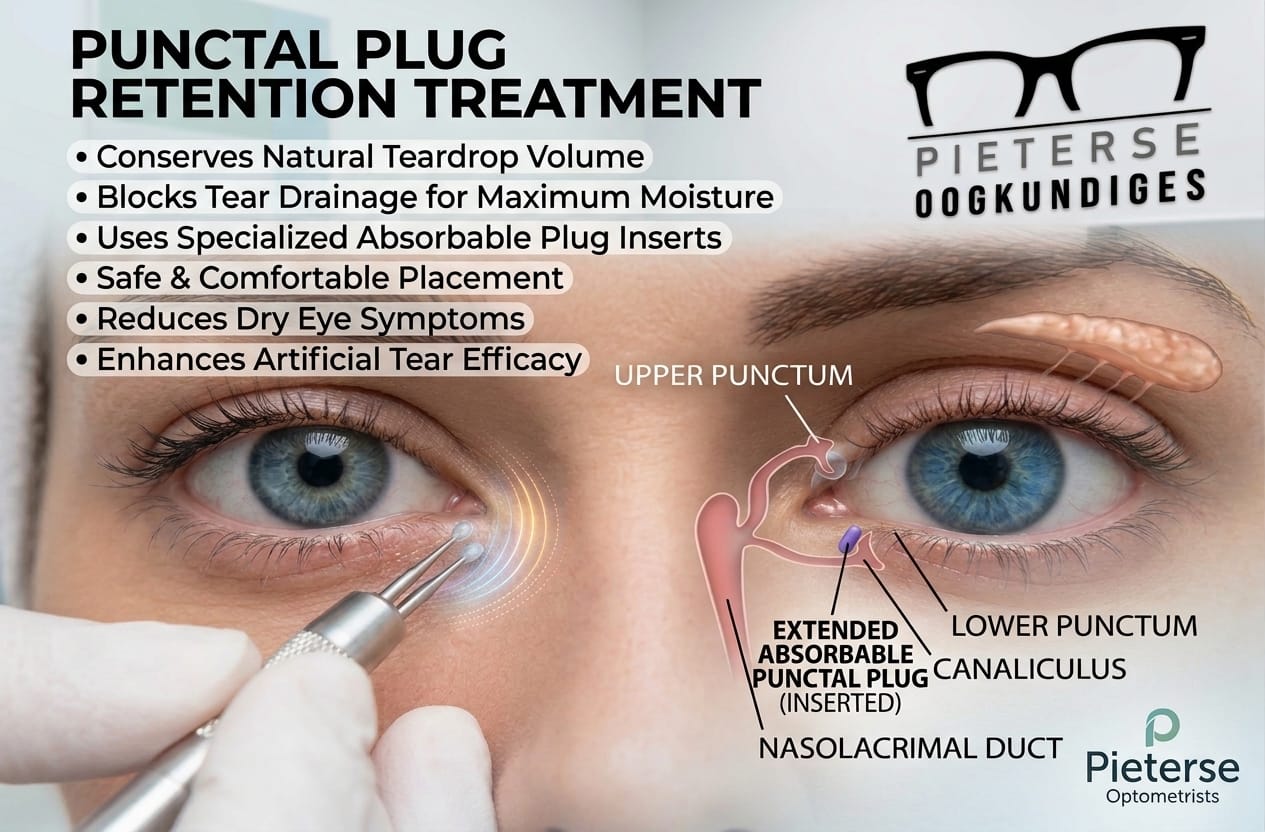
Sometimes the problem is not simply producing tears — it is losing them too quickly through the tear drainage system.
Punctal plugs are tiny biocompatible devices placed into the tear drainage openings, known as the puncta. By partially reducing tear drainage, they can help retain naturally produced tears and lubricating drops on the surface of the eye for longer.
At Pieterse Optometrists, we offer Extended Soft Plug 180 Days for appropriately selected patients.
- Helps retain tears on the ocular surface
- May reduce the need for frequent lubrication
- Can improve ocular-surface moisture
- Quick, minimally invasive in-office procedure
30-Minute Dry Eye Session
Clean · Warm · Express · Stimulate
Our 30-minute Dry Eye Session combines several components designed to address eyelid and Meibomian gland dysfunction in a single visit.
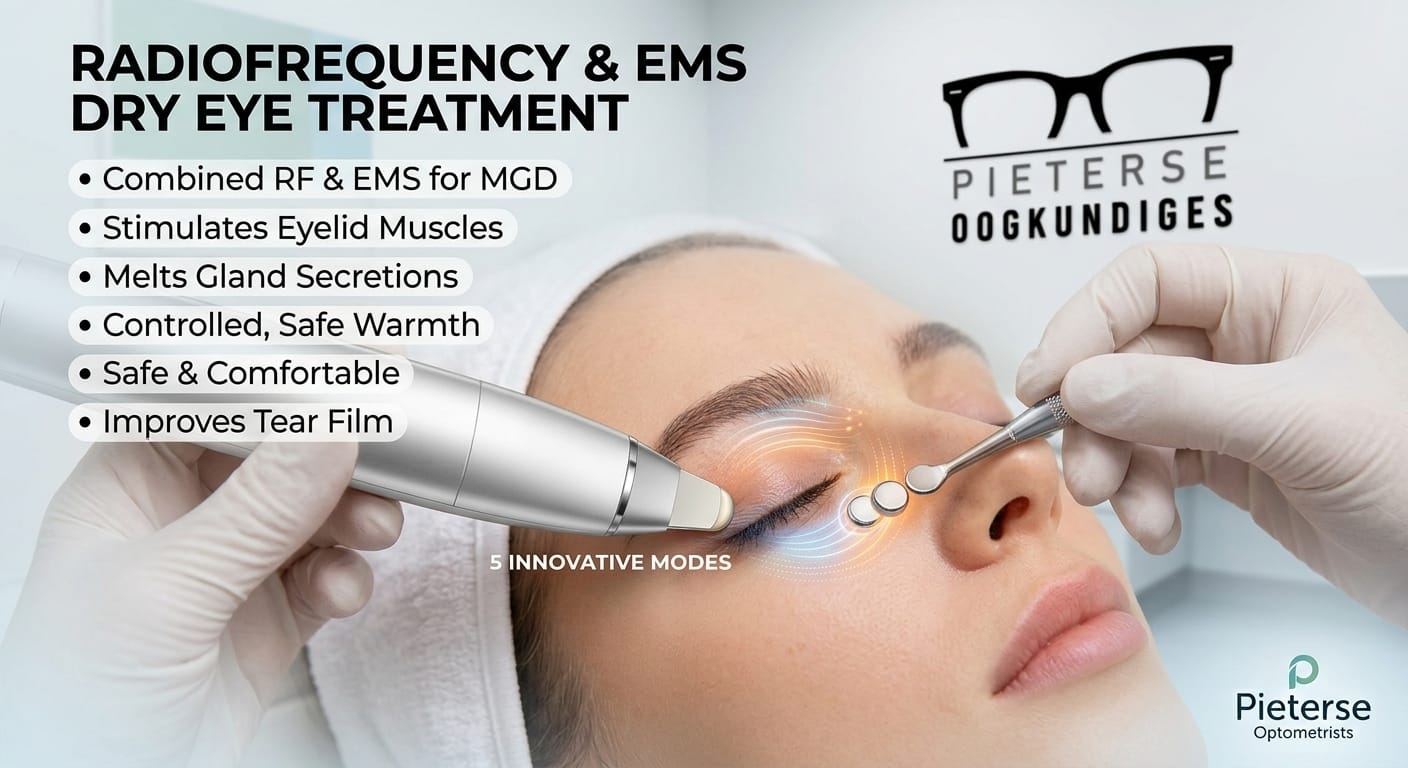
The session begins with in-office eyelid debridement to remove accumulated lid-margin debris and prepare the eyelids. This is followed by controlled eyelid warming, which helps soften Meibomian gland secretions, together with gentle Meibomian gland expression where clinically indicated.
Depending on the patient’s needs, the session may also incorporate RF/EMS technology. RF provides controlled warming of the periocular tissues, while EMS is intended to support eyelid muscle activity and blinking function.
The aim is to improve the environment in which the Meibomian glands and tear film function.
Treatment time: approximately 30 minutes.
Includes: Eyelid Debridement · Controlled Warming · Gland Expression · RF/EMS (where indicated)
IRPL® E>EYE Dry Eye Treatment
Advanced Treatment for Meibomian Gland Dysfunction
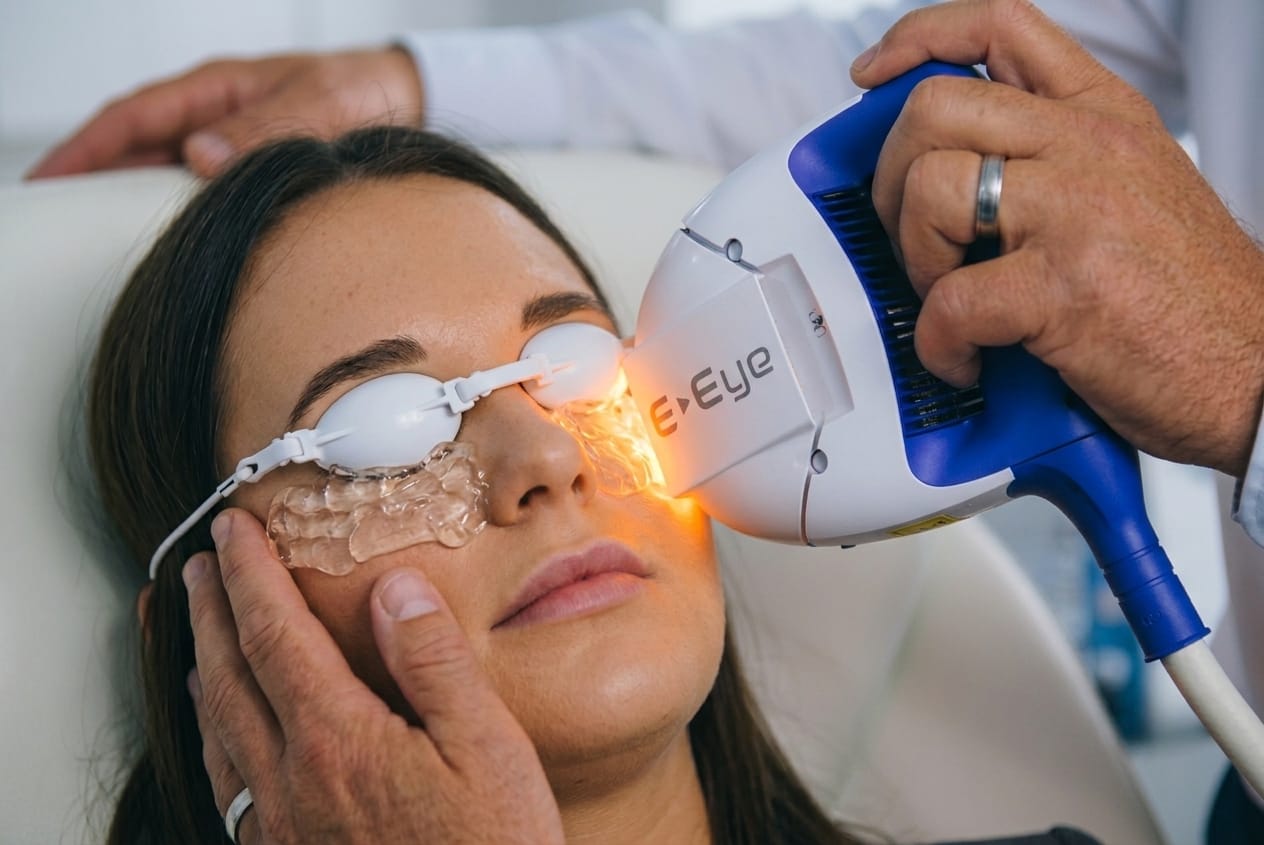
IRPL® E>EYE is a specialised Intense Regulated Pulsed Light technology designed specifically for dry eye associated with Meibomian gland dysfunction.
At Pieterse Optometrists, the E>EYE treatment forms part of a broader dry-eye management approach. Treatment may include eyelid debridement, eyelid preparation and warming, gentle Meibomian gland expression and the IRPL® treatment itself.
The aim is to address factors associated with Meibomian gland dysfunction and an unstable tear film.
Published clinical work reports improvements in measures including NITBUT, Meibomian gland scores and OSDI following E>EYE treatment as part of MGD management.
Suitable for: MGD-related Dry Eye · Evaporative Dry Eye · Unstable Tear Film